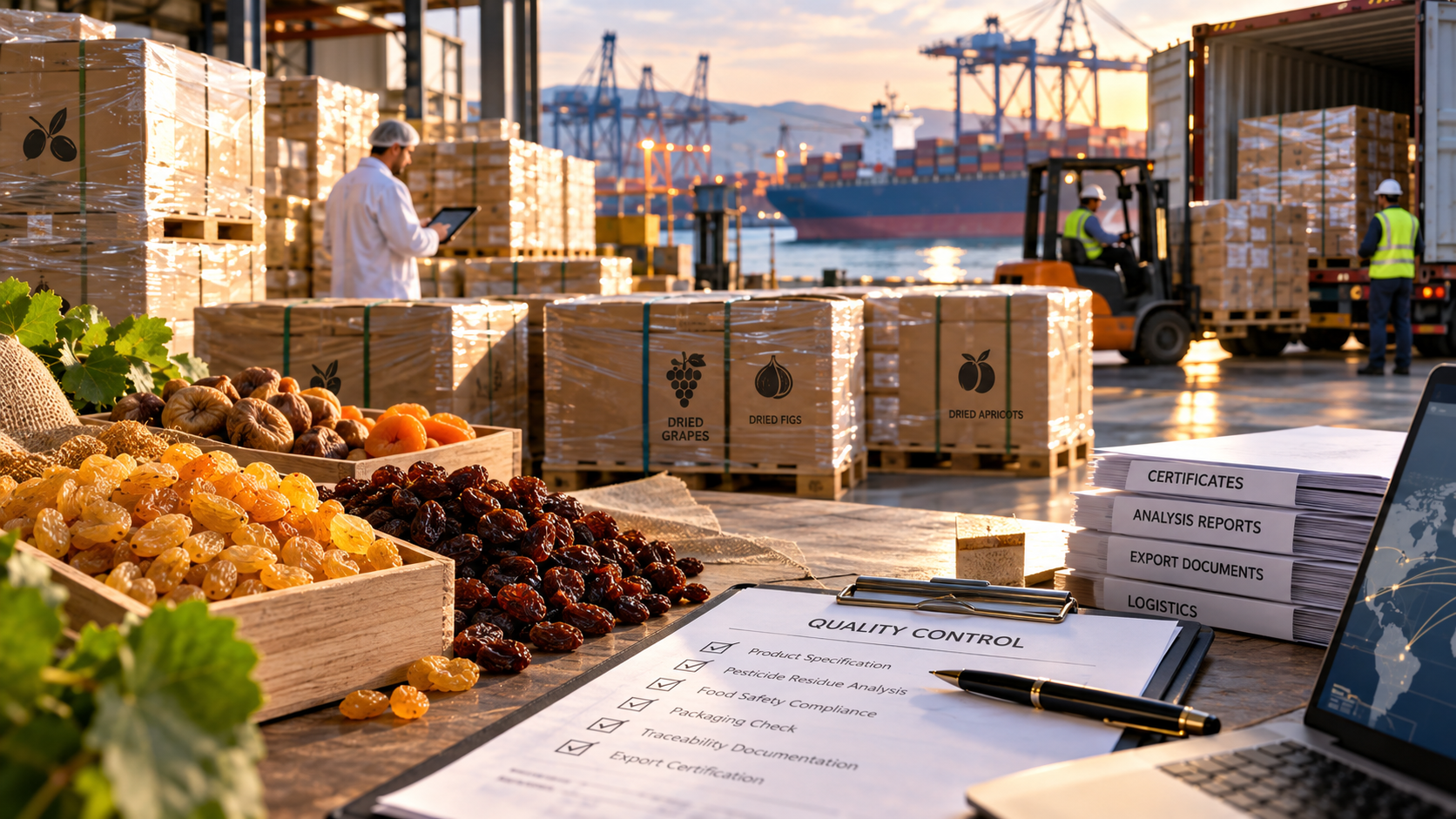
International food trade is becoming increasingly complex. For importers, wholesalers and distributors, choosing the right product and negotiating the right price are no longer the only considerations.
Packaging regulations, food-safety controls, pesticide residue limits, traceability requirements, logistics and changing production conditions are becoming increasingly important parts of international sourcing.
For companies sourcing food products from Türkiye, understanding these developments can help reduce supply-chain risks and improve purchasing decisions for the coming seasons.
One of the most important developments for companies supplying the European market is the European Union’s new Packaging and Packaging Waste Regulation (PPWR).
The regulation entered into force in 2025 and its provisions started to apply progressively from 12 August 2026. The new framework is intended to reduce packaging waste and move the European market towards more recyclable and circular packaging systems. Further requirements, including broader recyclability and recycled-content measures, will continue to develop towards 2030. Environment
For food exporters, this means that packaging decisions increasingly need to consider not only appearance, cost and transportation performance, but also regulatory compliance in the destination market.
There are also specific new restrictions concerning PFAS substances in food-contact packaging placed on the EU market from 12 August 2026. EUR-Lex
For B2B buyers, discussing packaging requirements with suppliers at an early stage can therefore become increasingly important.
Food safety remains another major consideration for international buyers.
The European Union applies Maximum Residue Levels (MRLs) for pesticides to food products marketed within the EU. Importantly, the same EU MRL requirements apply whether a product is produced inside the European Union or imported from a non-EU country. Food Safety
In 2026, the EU also introduced updated rules concerning sampling, laboratory analysis and interpretation of results for official pesticide-residue controls. EUR-Lex
For agricultural products such as olives, grapes and dried fruits, this reinforces the importance of product specifications, supplier controls, testing and documentation throughout the sourcing process.
International buyers may increasingly expect suppliers to provide clear information about product origin, specifications and relevant analysis before shipment.
Traceability is another fundamental part of modern food trade.
EU food law requires food businesses to be able to identify their immediate supplier and immediate customer, allowing products to be traced through the supply chain if a food-safety problem occurs. Importers must also be able to identify the exporter from whom the product originated. Food Safety
Digital systems are also playing a greater role in international food controls. The EU’s TRACES platform supports certification and information exchange for various agri-food imports and sanitary and phytosanitary procedures. Food Safety
For exporters and international buyers, reliable documentation and product traceability are therefore becoming increasingly important components of a professional supply relationship.
International buyers should also be aware that import controls are not static.
The European Union operates a risk-based system for food imports. When particular products or origins show repeated compliance problems, controls can be increased. The relevant control lists are reviewed regularly based on identified risks and information from EU Member States. Food Safety
This means that compliance problems can have consequences beyond an individual shipment.
For B2B buyers and suppliers, preventive quality control, accurate documentation and clear communication before shipment can help reduce the risk of delays and unexpected problems at the border.
Regulation is only one side of the supply chain.
Agricultural production is naturally exposed to changing weather conditions, rainfall, temperature, crop cycles and regional growing conditions. These factors can influence product availability, quality characteristics, sizes and ultimately market conditions from one season to another.
For products such as table olives, olive oil and dried fruits, international buyers should therefore avoid relying exclusively on previous-season conditions when planning future purchases.
Early communication between buyers and suppliers can help both sides evaluate expected quantities, product specifications, packaging requirements and shipment schedules before purchasing programmes are finalised.
Shipping conditions can also change rapidly.
Freight capacity, port congestion, geopolitical developments, transportation routes and seasonal demand can all affect lead times and logistics costs.
For this reason, the lowest product price does not necessarily represent the lowest overall supply-chain risk.
Professional buyers should consider production schedules, packaging preparation, documentation and transportation requirements together when planning orders.
Building reasonable lead times into purchasing programmes can provide greater flexibility when unexpected logistics disruptions occur.
The international food supply chain is moving towards greater transparency, documentation and regulatory oversight.
For buyers sourcing from Türkiye, several questions are becoming increasingly important:
These considerations are becoming an integral part of international sourcing rather than simply administrative requirements.
At Oveda Group, we believe successful international sourcing requires more than connecting a buyer with a product.
Working with trusted production partners in Türkiye, we aim to support international B2B customers throughout the sourcing process — from understanding product requirements and specifications to packaging discussions, quotations and export coordination.
We also continue to follow developments affecting international food trade, particularly in areas such as food safety, packaging, logistics and market requirements.
As international trade regulations and supply-chain conditions continue to evolve, our News & Insights section will share relevant developments that may affect international buyers sourcing products from Türkiye.
For information about Turkish food products, sourcing opportunities, packaging options and export quotations, contact Oveda Group.